How did Minding the Pitch start?

Qualifications
BA Music, BA Psychology
Hunter College, City University of New York
MSc Clinical Health Psychology
University of Strathclyde, Glasgow
Counselling Skills Certificate
Counselling & Psychotherapy Scotland
Vocal Health First Aid
Vocal Health Education
ASIST Suicide First Aid
LivingWorks
PVG Certified
Minding the Pitch was founded by - and is currently fully directed and delivered by - me, Sydney. The name "Minding the Pitch" was originally connected to an online course I created in 2021 with a fellowship from the Mellon Public Humanities program at Hunter College. This was a research and public outreach project that aimed to uncover how learning about, performing, and creating music like any musician would may promote recovery and rehabilitation following intensive treatment for serious psychiatric illness. This was inspired by my time volunteering in an inpatient psychiatric unit, where I led music groups for patients. When we did sing-alongs and the like, patients repeatedly asked me if I could teach
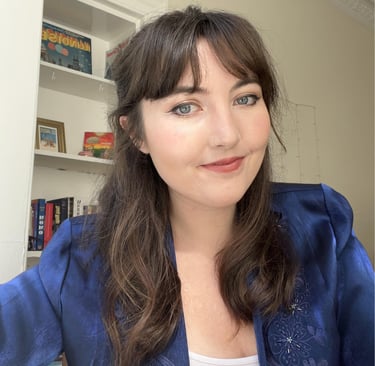
Sydney Guinchard Founder
them how to play an instrument, read sheet music, or write songs. This made me start to wonder whether those components inherent to learning about and making music might benefit those recovering from psychiatric illness.
My research, which was an in-depth review of the evidence base across psychology, health, and music education, told me, in short, yes. I will share an overview of what the evidence says here, but essentially, music training that encompasses listening, theory, performance, and composition / songwriting
After finishing the first version of Minding the Pitch, I went on to study a master's in Clinical Health Psychology, researching community-based programs for first-episode psychosis. I held a variety of jobs in community mental health and the social care sector, from working in a homeless shelter and a nursing home to a trauma therapy service and a residential service for care leavers. All of these deepened my awareness of how to support those with experience of disadvantage, adversity, trauma, and poor mental health, and this constantly informs my music practice.
Alongside running Minding the Pitch, I work as a researcher within the third sector, focusing on the social determinants of physical and mental health, youth mental health, youth justice, care-experienced young people, and whole-family support. I also have a strong personal interest in arts and health and advocating for the arts as a key health behavior.
Then what?
Musical Background
And perhaps most importantly, I am a musician. The majority of my formal musical training has been in classical and jazz voice, but like most singers, I have been singing my whole life. My current focus is primarily on popular music styles. I am also self-taught on guitar and mostly self-taught on piano. I have had university-level training in voice, piano, songwriting, music theory, and musicianship.
I started writing songs when I was 8 years old, and then I started writing real songs at 16. I love making my own music from start to finish, with my incredibly lacking production skills. After taking a several-year hiatus from making original music, I am now getting back to it. I am trying to embody my "it's never too late" message and start making music again, for myself, and for my own fulfillment.
How is Minding the Pitch different?
Minding the Pitch takes the position that music making should be for everyone, regardless of background, experience, and musical goals. Quality music education is inaccessible to many due to cost barriers, lack of flexibility in learning modalities, and a general culture that makes people feel that they can only participate in music creation spaces if they are professional or particularly skilled musicians. However, with a bit of knowledge and guidance, anyone can integrate music making into their lives, creating fulfilment, building confidence, and giving a medium through which to better understand and express oneself. In short, anyone who actively engages with music should be able to call themselves a musician.
Minding the Pitch also fills a gap in a lot of existing music for wellbeing programs. Using music for wellbeing doesn’t need to be a “watered down” version, with meaningful musical skill building reserved for the “musicians.” That said, in the online course, workshops, and private lessons, you remain the expert of what you need. Different sets of skills and knowledge are offered, but you decide if and how you use these to enhance your overall musical practice and personal development.
develops a host of cognitive, social, and emotional skills and capacities that protect against poor mental health and may improve long-term outcomes. I then used these findings to create a framework for how to design a short-term music training program that would maximize many of the mental health benefits of music.